
Toxin-Free Kitchen
How many times a day do you go to the kitchen? Have you thought about what is in your kitchen that exposes you and your family to unhealthy toxins? There is a lot of debate about all the following points, so we encourage you to do your own research. As the old saying goes, prevention is better than cure. Practising safe and healthy routines will help you to live a healthy life.

Avoid Processed Foods
Process foods not only lose some of their nutritional value, but the added chemicals to preserve your food for longer may also not be good for your health.
Anything Artificial like: Food colouring and dyes, genetically modified organisms (GMOs), sweeteners and artificial flavours (remember although the taste might be orange, it might not say the flavour is from a real orange)
Chemicals used as preservatives like: Bisphenol-A (BPA), BHA (Butylated Hydroxyanisole) and BHT (Butylated Hydroxytoluene)
Solution: Read your labels before you buy anything. More and more people are becoming conscious of these bad chemicals in foods. There are a few brands, more artisan brands, producing foods that are healthier.
Preferably Organic Food
Just like your skin absorbs chemicals, so do your fruits and vegetables. All those toxic chemicals they spray to either kill insects or keep them away do in small quantities enter your food. And if you eat it, enters your body.
Solution: Go visit your local farmers market. Talk to them so that you find out who prefer growing and making healthy products.
Containers
Using glass and ceramic containers to store the food we know is safe. The Bisphenol A (BPA) and phthalates in most plastic containers have long been said to be unsafe and leach into your food, especially when microwaved.
Solution: There is plasticware that says they are BPA and phthalates free if you trust that brand, go for it. Alternatively, there are always the good old glass and ceramics to keep your food fresh.


Avoid canned food
The epoxy liner in your canned food is mostly made with Bisphenol A (BPA). With the heating different studies have been done showing that the BPA ends up in the food that was canned. One study showed that BPA was detected in 71 of the 78 canned food samples.
Although studies differ, some human studies have linked BPA to health problems like heart disease, type 2 diabetes, and male sexual dysfunction.
Solution: Try to avoid canned food. We know except for the BPA seeping into the canned foods some other processed food has unhealthy preservatives, so the safest option is buying your fresh produce from your local food market with the grower you know and trust.
Avoid Non-Stick Cookware
There is widespread concern about the compounds used in non-stick cookware, especially in Teflon. PFOA (perfluorooctanoic acid) and PFAS (per- and polyfluoroalkyl substances) are said that it might cause cancer.
Solution: Rather use alternative safer cookware like Cast-iron, stainless steel, stoneware, and ceramic cookware.
Toxic-free Cleaning
This is a scary one with the number of toxins it brings into our home which ends up in our bodies. And the list of toxins is long (read “Know the Enemy” to learn more). Remembering all of those and knowing which of the big words means what on the ingredients label when you shop is not practical.
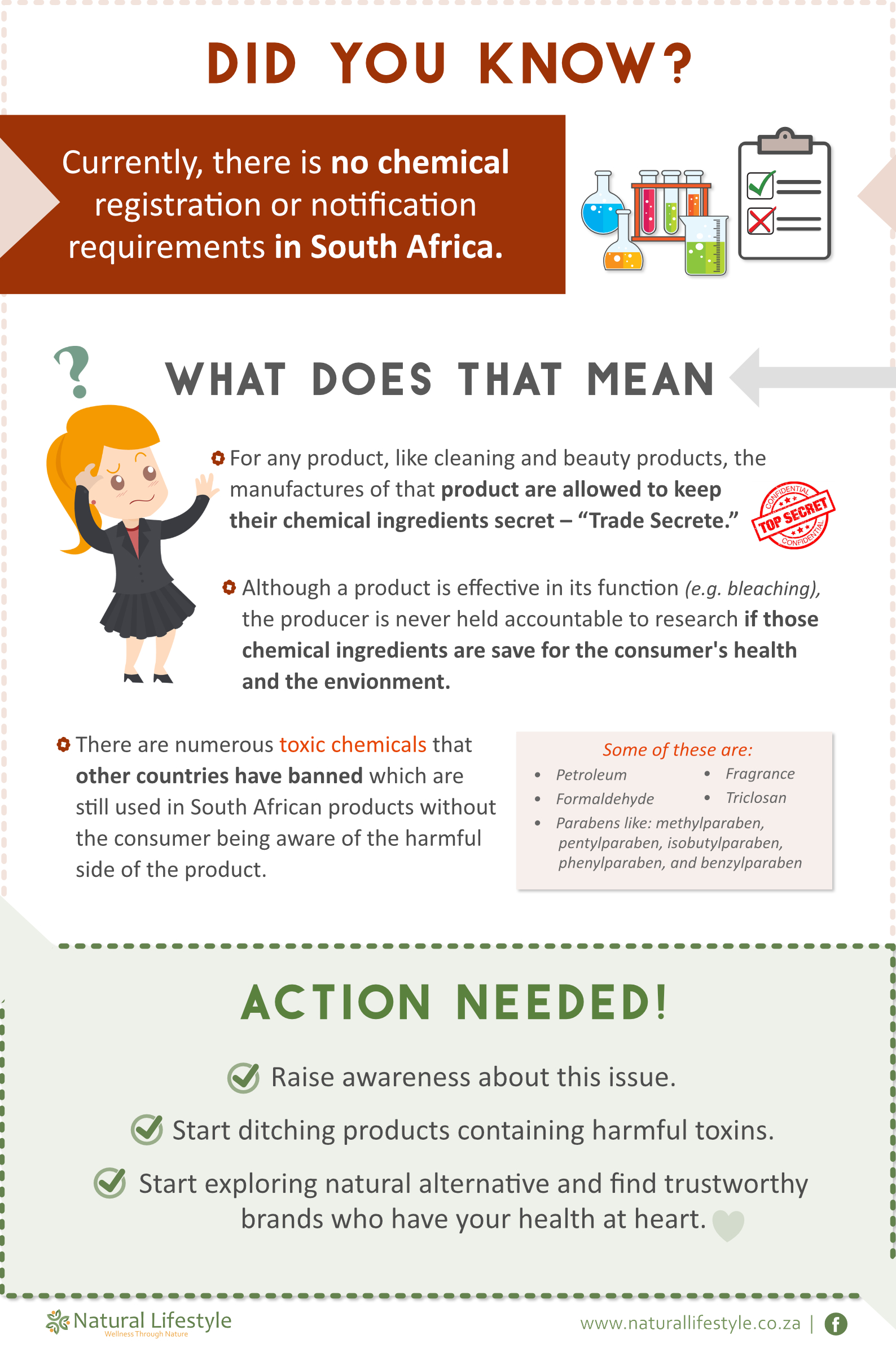
Solution: Get rid of those cleaners with the toxins and get natural-based cleaners. In South Africa however, you still need to be focused on the ingredients because South Africa has nobody to control or rule what are seen as toxins and whatnot. So, some “green” companies still use toxins that are OK according to SA law, which internationally some countries have banned. Young Living’s “ Seed to Seal” guarantee, and their dedication to creating high standards for their natural products make them a trustworthy option.
Some Additional Resources
- https://www.health.harvard.edu/staying-healthy/is-plastic-a-threat-to-your-health
- https://www.businessinsider.com/bpa-plastic-containers-bad-health-risks-obesity-heart-disease-diabetes-2019-2?IR=T
- https://foodandnutrition.org/blogs/stone-soup/whole-foods-vs-processed-foods-less-actually-better/
- https://www.medicalnewstoday.com/articles/318630#is-it-bad-for-you
- https://pubmed.ncbi.nlm.nih.gov/21598963/
- https://www.cancer.org/cancer/cancer-causes/teflon-and-perfluorooctanoic-acid-pfoa.html